

Crane Season at The Bird Ranch
Twenty thousand cranes, twenty minutes away.
Herons nesting in the cottonwoods along our creek.
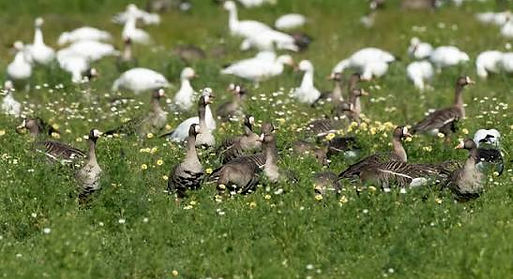
Every autumn, the Pacific Flyway empties itself into the wetlands of Merced County. Twenty thousand lesser sandhill cranes and sixty thousand arctic-nesting geese arrive from Alaska and Canada and settle in for six months. It is the largest wintering concentration of either bird anywhere on the flyway.
Most people drive out from the Bay Area before dawn, spend two hours in the cold, and drive home. We think there is a better way to do it.
The Bird Ranch sits on thirty-two acres along San Luis Creek on the west side of the county, with seven rooms that sleep twelve. San Luis National Wildlife Refuge is twenty minutes away. Merced National Wildlife Refuge, where the cranes gather in the thickest numbers, is thirty-three minutes east and opens at seven, which still beats a two-hour drive from the coast before sunrise.
Our creekside meadow has a dock that has been a birdwatching spot for years. We work with local nonprofits, including Ducks Unlimited, on habitat restoration, including native plantings for monarch butterflies. Bring your binoculars to breakfast.
San Luis National Wildlife Refuge
About twenty minutes away. Nearly 27,000 acres with three auto tour routes and more than ten miles of nature trails. Home to a resident herd of tule elk, visible year round, along with wintering waterfowl in enormous numbers. The visitor center is open weekdays, 8:00 AM to 4:00 PM, and closed weekends, though the auto tour routes stay open.
Merced National Wildlife Refuge
About thirty-three minutes east, and worth every mile. More than 10,000 acres of wetlands, native grasslands and vernal pools, with a five-mile auto tour route, four nature trails, and two elevated observation platforms with mounted spotting scopes. This is where the cranes and the white geese gather in their thousands. Open daily, 7:00 AM to 5:15 PM. No entrance or parking fee.
Our Rookery here on the ranch.
Great blue herons and snowy egrets nest together in the cottonwoods along San Luis Creek. The birds on our sign are not decoration. They are the birds outside.
The herons come first. Courtship begins in late January, nests are built through February, and clutches are laid by mid-March while the trees are still bare, which is the clearest viewing of the year. The egrets arrive in spring and nest into the summer.
WHEN TO COME
September — The first cranes return, usually mid-month. Swainson's hawks kettle over the grasslands as they gather to migrate.
October — Ducks arrive in growing numbers as the wetland basins flood.
November through February — The peak. Snow and Ross's geese arrive by the tens of thousands. Tundra swans appear in December. This is the season people plan their year around.
Late January through July — Our rookery. Herons court and nest first, egrets follow in spring, and chicks are in the nests through early summer.
March — The last of the winter birds before they head north again. Quieter, softer light, fewer visitors.
The evening fly-in is the thing to see. Cranes return to roost in the wetlands at dusk, and the refuge runs ranger-led interpretive presentations on winter evenings.


FOR GROUPS
Bird alliances, camera clubs, and adult education classes are welcome. Booking the whole ranch gives your group exclusive use of the property, the farmhouse and all guest cottages, with the grounds to yourselves.
Whole ranch bookings of three weekday nights or more are fifteen percent off for three nights sleeping twelve, and midweek is when the refuges are quietest anyway.
Five minutes off Interstate 5, on the west side of Merced County, about an hour and a half from San Jose, two hours from Oakland and Sacramento, an hour from Modesto. Close enough to arrive after work on a Friday. Far enough that the only sounds at night are the creek and the birds.
Two-night minimum November through February.